What's Keeping the Microgravity Economy On The Ground?
The science is proven, but the promised commercial future is yet to eventuate

Decades of research in Low Earth Orbit (LEO) has demonstrated the potential improvements that are possible in the manufacturing of pharmaceuticals, semiconductors, fibre optics, and more in microgravity. Yet, despite this compelling science, products manufactured in space aren’t a part of terrestrial supply chains. What’s stopping them?
The Launch Analogy
Launching a rocket involves a complex set of procedures that need to happen in order. The idea is simple; a few minutes before T-0, if all criteria are GO, the rocket can head to space - like in this famous scene from Apollo 13. If any of them are NOGO, the rocket is stuck on the pad.
The “launch” of the commercial microgravity industry also has its own GO-NOGO criteria - and a major one is stuck on NOGO:
Fundamental research - GO
Research conducted in orbit, from Skylab, the Space Shuttle and onto the International Space Station, has proven the benefits of removing the distorting force of gravity from a material process. A wide range of materials, medicines, cell therapies, and devices have been tested, analysed, iterated, and improved. We know the potential unlocked by microgravity, and how to apply it thanks to this research.
Tech development - GO
Building on the fundamental research, manufacturing technologies have been invented, iterated and validated in orbit. We have payloads and processes designed to forge semiconductor substrates, crystallize proteins and grow improved cellular structures.
Prove the benefit - GO
These payloads have been operated in space, and their outputs returned to Earth. They’ve been evaluated against control samples produced on earth, conclusively demonstrating that removing the distorting influence of gravity produces improved products. Companies have built the business cases to compete against terrestrial supply chains.
Build factory - GO
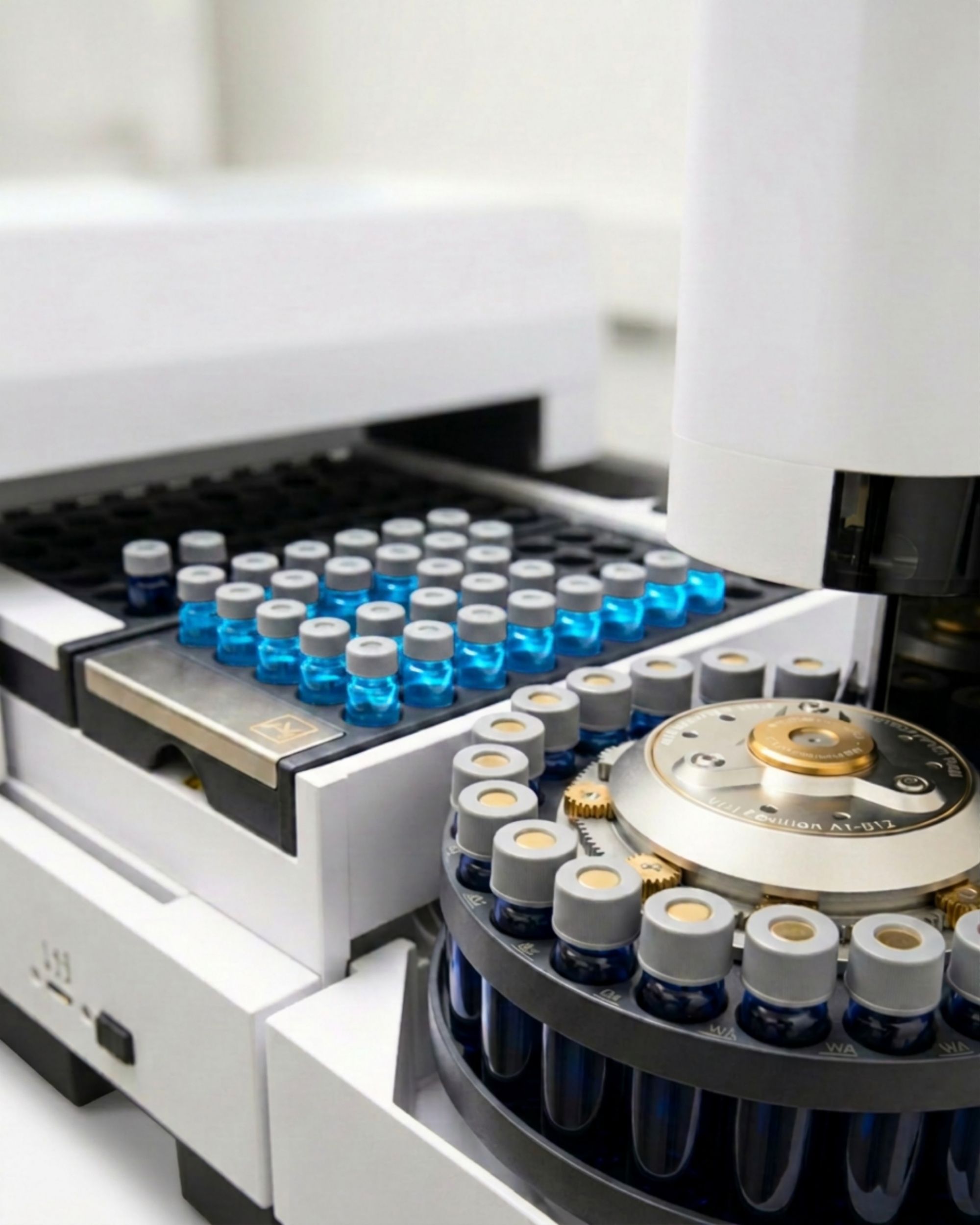
From everything learned above, companies have designed and built the factories that will transform materials in space. These payloads are more than a demonstration – they are ready to produce at scale.
Access to Scale - NOGO
Here is where the sector reaches its major blocker: access to space with safe return. All of the previous steps can be achieved with periodic flights to the ISS - a cycle that can take years to achieve, with stringent design and test requirements that need to be met to keep the astronauts safe. Clearly though, an irregular, multi-year cadence for each batch doesn’t allow companies to run a business. Additionally, the ISS is facing imminent retirement. No-one wants to buy from a supplier that can’t reliably deliver on schedule.
Getting to GO with Outlier
Achieving scale looks like frequent, affordable, reliable missions to and from space, with simple approval and licensing processes. Delivering the trifecta of frequent, affordable and reliable is a tough ask, and that’s why we are taking a unique approach at Outlier. Fully reusable spacecraft allow users to integrate their factories once, but fly regularly - only reloading raw materials each cycle. Best in class payload/spacecraft mass ratio keeps services affordable.
This is transformative for manufacturers. They can now plan production like factories on Earth do, signing supply agreements with their customers built upon a predictable delivery schedule. This platform shifts microgravity manufacturing from a novel R&D experiment into a trusted supply chain of materials impossible to make on Earth.
The microgravity manufacturing economy is GO for launch with Outlier.
If you'd like more insights, connect with our team.