Outlier Space raises US$7.35m to build commercial microgravity return platform
Outlier Space today announced it has closed a US$7.35 million pre-seed round - one of the largest pre-seed raises in New Zealand history.

Auckland, New Zealand - Outlier Space today announced its US$7.35m pre-seed fundraise to develop a commercial microgravity payload capsule.
The raise is one of the biggest pre-seed raises in New Zealand history and reinforces the country’s reputation for producing world-leading engineering and aerospace solutions.
Outlier Space is building an autonomous satellite capsule designed to carry research or manufacturing payloads into space for weeks to months, then return them safely to Earth. The platform will give pharmaceutical, biotechnology, advanced materials and science customers reliable, scalable and repeatable access to microgravity.
The pre-seed round was led by GD1 (Global from Day One), with participation from Nova Threshold, Brian Cartmell, Airtree, Icehouse Ventures, Investible and Side Stage Ventures.
The funding will be used to develop Outlier Space's first reusable satellite capsules, which will be able to fly on any available rocket. Outlier Space is currently developing and qualifying its first spacecraft. A test flight is targeted for 2028, subject to engineering, regulatory and funding milestones.
Access to the Impossible
Jamie France, Outlier Space's Founder and Chief Executive, says the raise demonstrates the strength of New Zealand’s aerospace sector. "We're extremely grateful for the confidence our investors have put in us. This investment enables us to recruit the talent to go and deliver.
“New Zealand has world-class, innovative engineers and a space industry that is respected globally for its cost-effective, quality execution. Our team of engineers have previously designed and launched orbital rockets, built multiple satellite buses, and delivered payloads that both orbit the Moon and explore its surface. Our people have been at the forefront of numerous globally significant advances in space. It shows that we have the talent to deliver a world-first commercial offering from New Zealand.”
Vignesh Kumar, Co-Managing Partner at GD1, says: "We tracked Jamie for several years before investing, and our conviction only grew in that time. He proved at Rocket Lab that he can build the production engine behind a world-leading launch programme, and he's now assembling a team of aerospace veterans to do it again. With the ISS nearing end-of-life and the launch landscape evolving, the conditions for a commercial microgravity platform have never been stronger. GD1 has built deep conviction in New Zealand's space hardware ecosystem through our portfolio over the past few years, and we're proud to continue here by leading Outlier's first round."
France says timing is an important factor in the business’s launch. “The cost to orbit is at an all-time low. The International Space Station, which has proved the science over the last three decades, is being decommissioned soon. We’re already seeing strong demand for a commercially viable, uncrewed commercial platform, which is what we are building."
How Outlier Space's Technology Works
Outlier Space's customers are developing new materials that demand a microgravity environment, for creating breakthrough innovations including cancer treatments, improved drug discovery, next-generation semiconductors and human tissue models. Microgravity allows some compounds to behave in significantly improved ways, enabling the formation of purer crystals, more uniform protein structures, and advanced materials with properties unachievable on Earth due to the distorting effects of gravity.
France says: “Microgravity is an environment where gravity no longer dominates, allowing molecular and surface forces to shape behaviour that is normally hidden on Earth”.
"Outlier is like the landlord for a very special factory. Our customers supply the manufacturing equipment, and we enable that equipment to bypass gravity so they can produce their materials. To do that, we need to take them to space and bring them all home again safely.”
France's career spans high-performance engineering across sport, aviation and aerospace. At Emirates Team New Zealand, he worked across multiple America's Cup campaigns over 16 years, including the 2000 winning campaign. At Altitude Aerospace, he led the development of Air New Zealand's Skycouch seat from concept to flight, earning multiple patents and a Gold Pin at the 2010 Best Design Awards. He then spent almost 10 years at Rocket Lab, starting as Senior Vehicle Design Engineer on Electron, developing the Rocket Lab manufacturing system as Production Director, and finally as Global Director of the Electron launch vehicle programme.
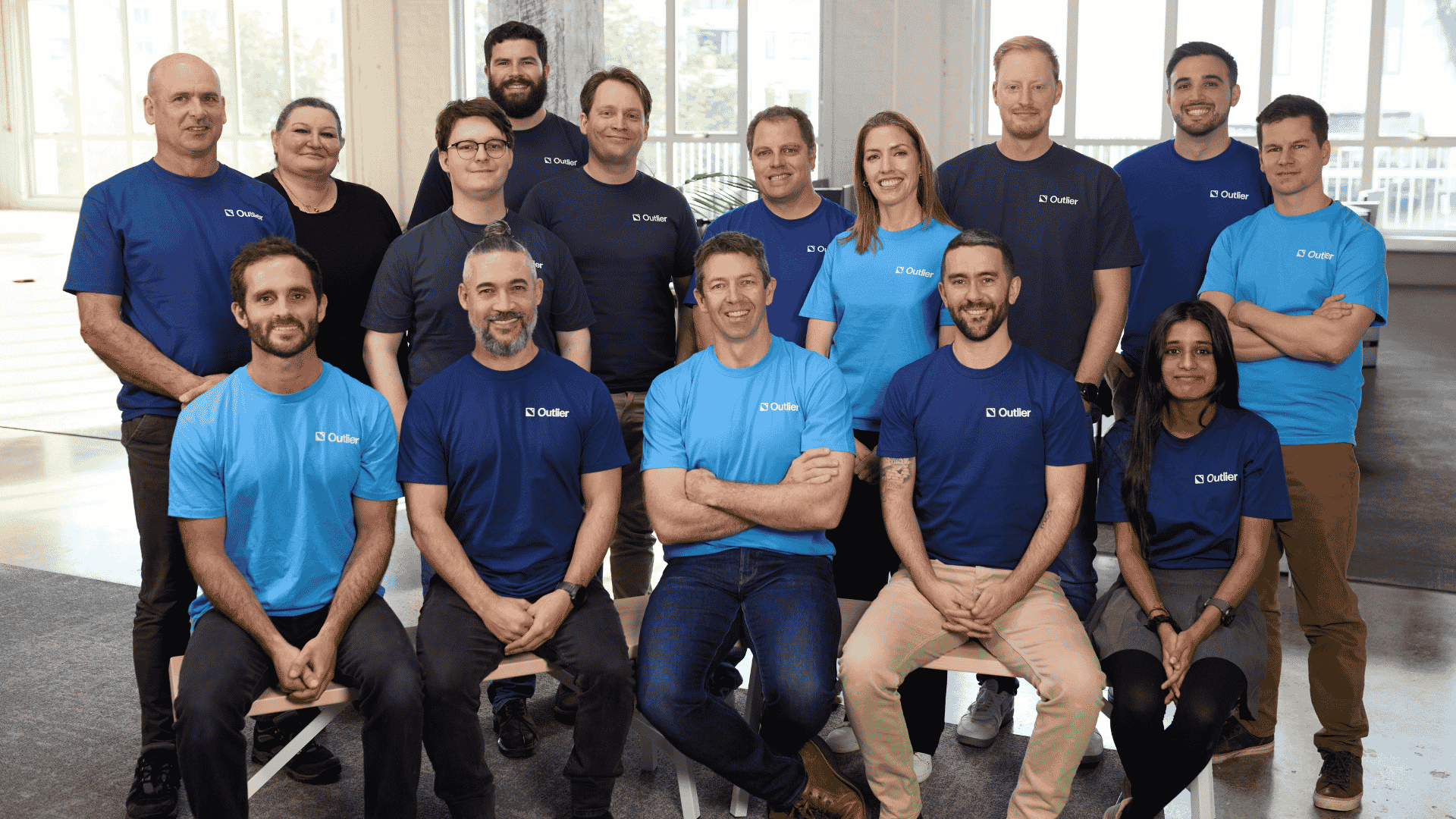
Outlier Space’s growing team of engineers and designers are drawn from New Zealand and Australia’s exceptional aerospace and high-performance ecosystem. France says: “New Zealand and Australia have exceptional talent depth in high-performance sport, aviation, space and health. This is the best place in the world to build Outlier.”